
Aztec Land & Cattle (AZLCZ) | Part 2: NAV Deep Dive
Evidence-Based Asset-by-Asset Breakdown

ASSET 1: RENEWABLE ENERGY LEASE PORTFOLIO
This is the single most important value driver in the near term and the asset where the market’s mispricing is most quantifiable. Aztec’s renewable energy leases have transformed from speculative optionality into contracted, construction-phase revenue streams backed by two of the most significant energy companies in North America.
Project Inventory: Confirmed & Under Construction
A. West Camp Wind Farm (AES Clean Energy)
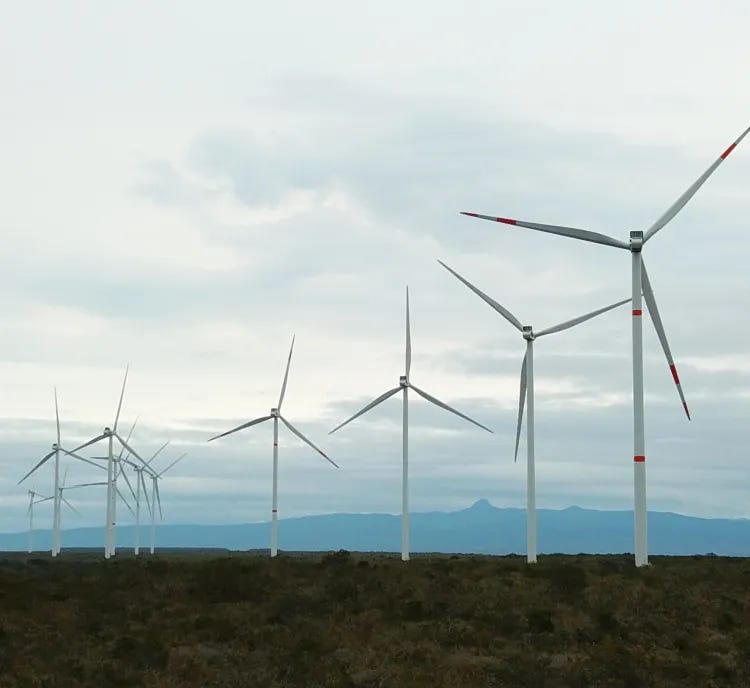
Capacity: 500 MW from 112 turbines (one of the largest wind projects in Arizona)
Developer: AES Corporation (NYSE: AES), a Fortune 500 global energy company with $12B+ revenue
Location: Approximately 35,000–45,000 acres of majority privately owned land in Navajo County
Status: Construction underway as of late 2024; expected operational by early-to-mid 2026
Grid interconnection: Will connect to the Arizona grid at the retired Cholla Power Plant switchyard via either a 345kV line to the APS Sitgreaves Substation or a 500kV line to a new switchyard on the SRP Cholla-Sugarloaf-Coronado 500kV transmission line
Revenue to Aztec: The greater of a pre-established minimum rent or an annual royalty payment based on a percentage of project revenues. Per-turbine construction impact fees were received upon commencement of construction.
PPA counterparty: Arizona Public Service (APS), the state’s largest utility
Evidence: Aztec November 4, 2024 investor update; AES West Camp project page; Arizona Corporation Commission CEC-251 transmission hearing docket (October 2025); West Camp 2 transmission application.
B. Hashknife Solar Energy Center (Invenergy)
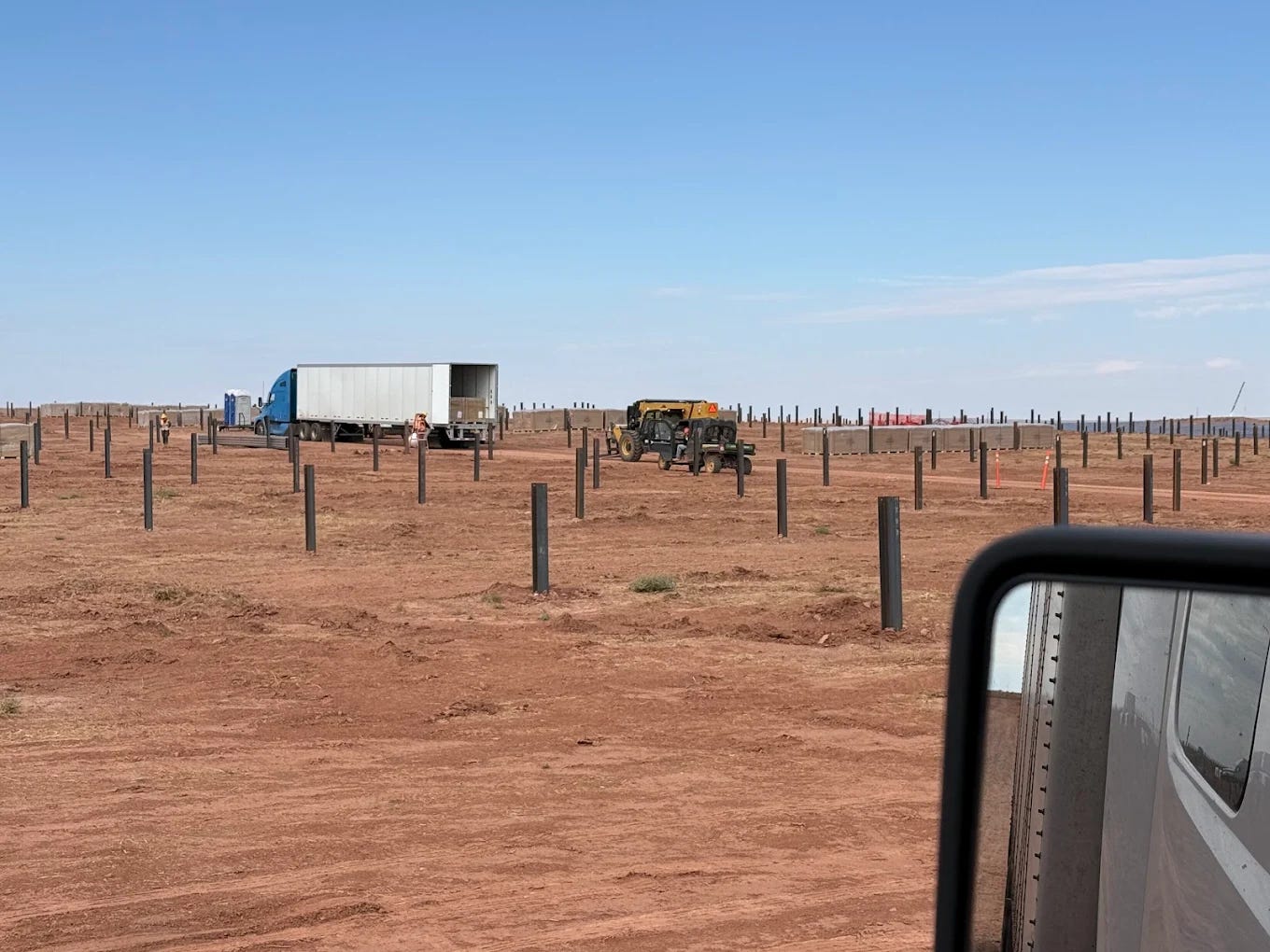
Capacity: 475 MW solar + 475 MW / 1,900 MWh battery energy storage (combined Phases I and II)
Developer: Invenergy LLC, the largest privately held renewable developer in North America
Phase I: 275 MW solar + 275 MW / 1,100 MWh storage on approximately 3,000 acres of Aztec land. Construction began December 12, 2024. Expected commercial operations 2027.
Phase II: 200 MW solar + storage on approximately 1,200 acres of Aztec land (plus third-party land). Construction anticipated mid-2025. Expected commercial operations mid-2027.
Grid interconnection: Cholla Substation and planned Sitgreaves Switchyard, leveraging existing APS transmission infrastructure
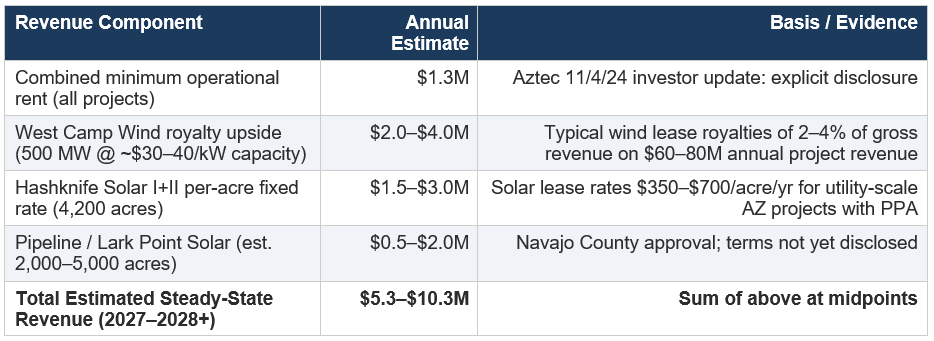
Revenue to Aztec: The greater of a pre-established minimum rent or an annual per-acre fixed rate for each phase. Combined minimum operational rent for all projects (wind + both solar phases) is approximately $1.3 million per year.
PPA counterparty: APS - both phases are part of APS’s largest-ever portfolio of power secured through a single RFP for Arizona consumers
Economic impact: Over $49 million in direct investment into Navajo County over the project’s lifetime; up to 450 peak construction jobs
Evidence: Invenergy press release December 17, 2024; Hashknife Energy Center project website; Luminate LLC independent engineer disclosure; Painted Desert Tribune coverage December 18, 2024; AZFamily coverage December 13, 2024.
C. Additional Solar Projects (Pipeline)
The March 2026 investor update references a new solar energy project, and Navajo County approved the Lark Point Solar project on Aztec-owned land in late 2024. The development pipeline continues to grow as APS seeks to add 6 GW of new renewable capacity between 2025 and 2031.
Revenue Evidence and Valuation
Management disclosed that 2024 total revenues from renewable energy leases in their development phases were approximately $2.9 million, plus approximately $1.3 million in construction-related fees, for total renewable-related income of approximately $4.2 million in 2024. This represents a development-phase revenue run rate before any projects have reached full operational status.
Projected Operational Revenue Build
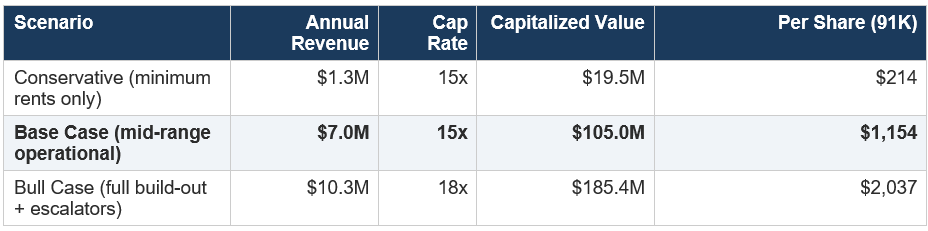
Capitalized Value of Renewable Lease Portfolio
Long-duration, inflation-protected lease income with investment-grade counterparties (APS is the regulated utility subsidiary of Pinnacle West Capital, an S&P 500 company) commands premium capitalization rates. Comparable transactions for contracted renewable lease portfolios trade at 12x–18x annual cash flow.
Infrastructure Score Card: Renewable Energy Land
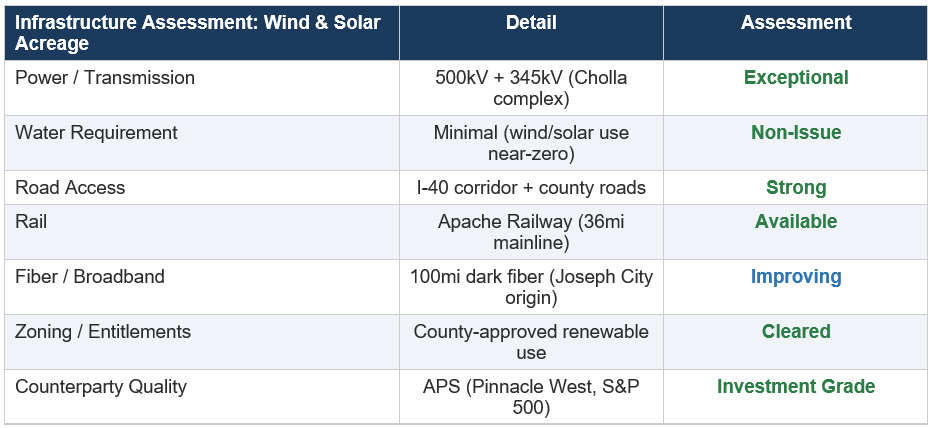
The renewable lease portfolio is the strongest near-term asset. The combination of institutional-grade counterparties (APS), world-class developers (AES, Invenergy), existing grid infrastructure, contracted PPAs, and physical construction underway makes this a high-conviction value driver. The $1.3 million minimum rent floor provides downside protection, while royalty and per-acre escalators provide meaningful upside as projects reach full operations.
ASSET 2: SURFACE LAND - 239,000 ACRES
The surface acreage must be valued in layers: the base agricultural/ranch value, the renewable energy premium for land under or adjacent to lease, and the long-duration development option on the remainder.
Layer 1: Base Ranch Value (All 239,000 Acres)
Comparable Evidence
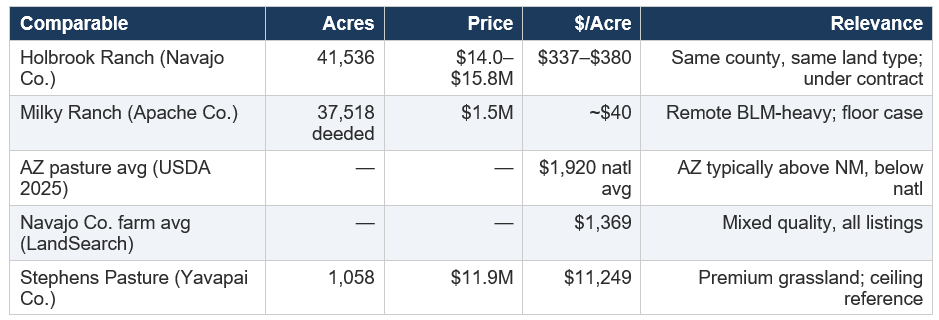
The Holbrook Ranch transaction is the most directly comparable. At 41,536 acres listed under contract at $14.0–$15.8 million, it implies $337–$380 per acre for a large-scale Navajo County ranch with no renewable energy leases, no railroad, and no grid infrastructure. This is the floor for Aztec’s base ranch value.
However, Aztec’s acreage is fundamentally different from the Holbrook Ranch in several respects. First, Aztec’s holdings are approximately 5.7 times larger, and large contiguous blocks command a premium in Arizona where private land comprises only 16% of total state area. Second, Aztec’s land is already generating revenue from renewable leases. Third, the land has railroad access, highway frontage (I-40 and Route 77), and direct proximity to institutional-grade transmission infrastructure. Fourth, the checkerboard pattern, while complex, has been substantially consolidated over 140 years of patient acquisition.
Acreage Segmentation
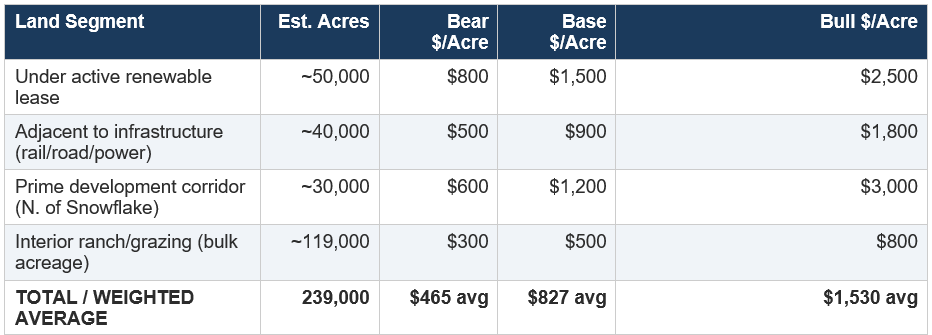

Development Potential Assessment
The company submitted a master area plan to Navajo County in 2012 contemplating a gradual transition from purely agricultural zoning to mixed commercial and residential uses on portions of its southern holdings (north of Snowflake). CEO Steven Brophy has publicly stated that the next logical path of development in Arizona runs north of Snowflake and south of Joseph City - directly through Aztec’s land.
Arizona is adding roughly 90,000 new residents per year, and the Phoenix metropolitan area’s northward expansion is pushing development pressure toward previously rural areas. While full-scale residential or commercial development of Aztec’s land is a 10–20+ year horizon event, the option value is non-trivial. Even converting 5,000 acres (roughly 2% of holdings) to entitled residential or commercial lots at $15,000–$50,000 per acre would create $75–$250 million of value - more than the company’s entire current market capitalization.
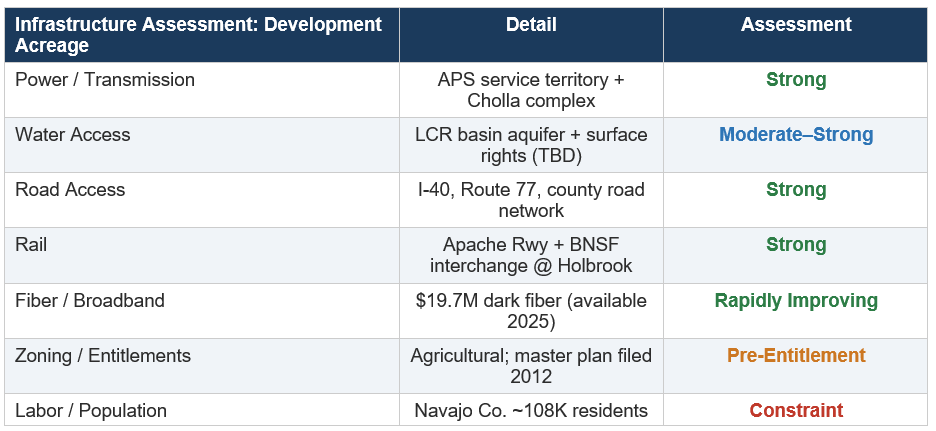
Infrastructure Score Card: Development Land
ASSET 3: MINERAL RIGHTS - 318,000 ACRES
Aztec controls approximately 318,000 acres of mineral rights across Navajo and Coconino Counties, some extending beyond the surface holdings. These subsurface rights are carried at near-zero book value and generate modest lease income. However, the geological record underlying this acreage is more interesting than the balance sheet suggests.
The Holbrook Basin Potash Deposit
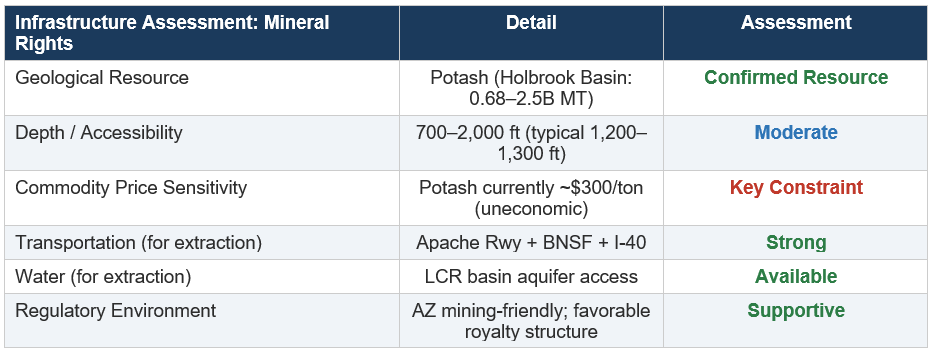
The Holbrook Basin hosts one of the most significant undeveloped potash deposits in the United States. The Arizona Geological Survey documented the resource in 2008, estimating that the deposit underlies approximately 600 square miles east of Holbrook, with the potash residing in the Permian Supai Formation at depths of 700–2,000 feet (most commonly 1,200–1,300 feet). Maximum potash thickness reaches approximately 40 feet. Historic drilling data suggests a potash resource of 0.68 to 2.5 billion metric tons.
Multiple companies explored this deposit between 2008 and 2014. American West Potash reported indicated resources on approximately 94,000 acres at 158 million metric tons of sylvinite with about 16 million metric tons of K2O. Passport Potash acquired strategic positions encompassing over 121,000 acres and entered into exploration agreements with the Hopi Tribe. However, when global potash prices collapsed from over $800 per ton in 2009 to roughly $300 per ton by 2013, commercial development became uneconomic and exploration ceased.
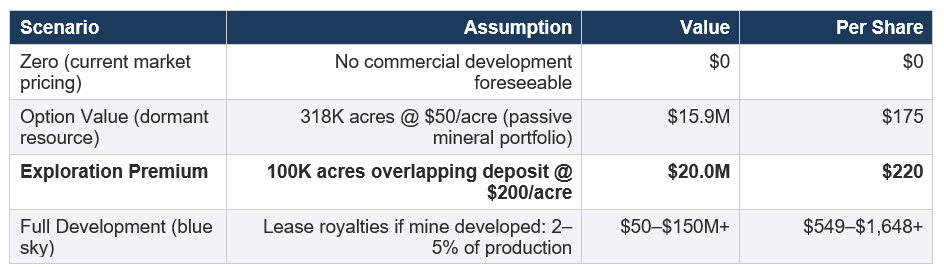
The critical question for Aztec investors is: what portion of the Holbrook Basin potash deposit underlies Aztec’s 318,000 mineral acres? While Aztec has never disclosed the specific overlap, the geographic footprint of the deposit (centered east of Holbrook across Navajo and Apache Counties) substantially overlaps with Aztec’s mineral holdings. Even a partial overlap - say 50,000–100,000 acres - would represent a meaningful option on future potash development if prices return to economically viable levels.
Potash Valuation Scenarios
Other Mineral Potential
The Holbrook Basin also contains helium deposits (a former helium-producing area exists near the northeastern extent of the potash deposit) and extensive salt formations. Arizona’s helium resources have attracted renewed interest as global helium shortages have emerged. Additionally, the Permian salt formations have been used for LPG (liquefied petroleum gas) storage near the northwestern extent of the deposit. While speculative, these secondary mineral resources represent additional option value within Aztec’s 318,000 mineral acres.
Infrastructure Score Card: Mineral Rights
ASSET 4: APACHE RAILWAY
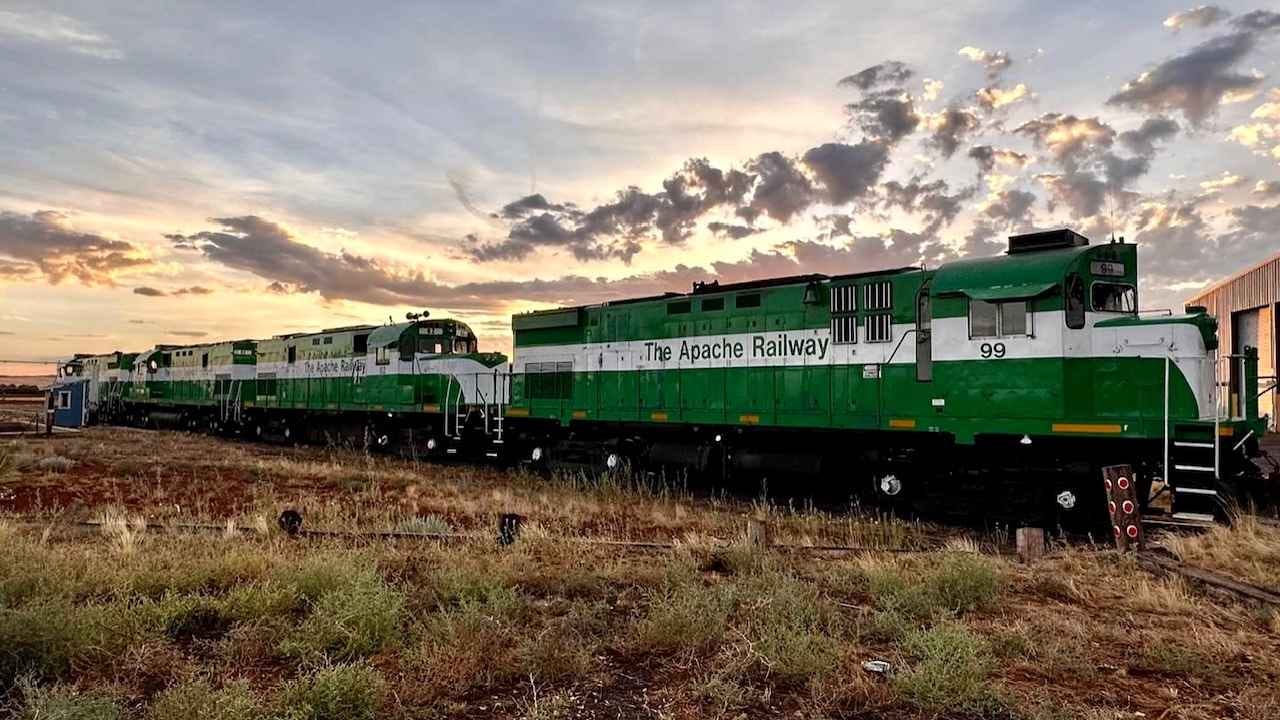
Aztec Land & Cattle Company and Midwest Poultry Producers LP purchased the Apache Railway Company out of bankruptcy in late 2015, preventing the scrapping of a 107-year-old rail line. This acquisition was strategically motivated: the railroad traverses Aztec’s land and connects it to the national freight rail network.
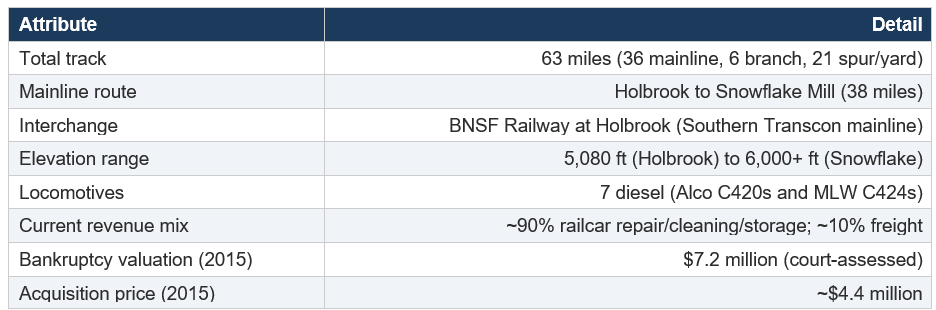
Physical Assets
Strategic Value vs. Earnings Value
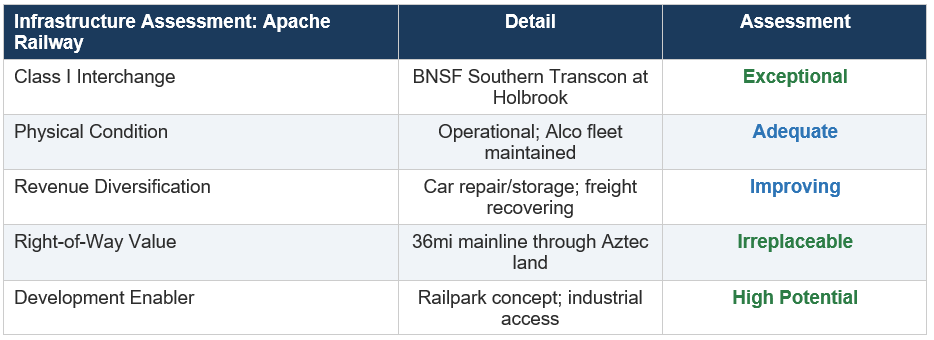
The Apache Railway is not a significant standalone earnings generator. Its primary value is strategic: it provides multimodal transportation infrastructure to Aztec’s land that would cost tens of millions of dollars and years of permitting to recreate. The West Snowflake Railpark development concept - marketing commercial land along the railroad for industrial and distribution uses - is built on this infrastructure.
The railroad’s interchange with BNSF at Holbrook connects Aztec’s land to the BNSF Southern Transcon, one of the busiest freight rail corridors in North America. This is a direct connection to both domestic markets and international ports (Long Beach, LA, etc.). For any future industrial development on Aztec’s land - whether that involves potash mining, solar panel manufacturing, agricultural processing, distribution, or data center construction materials logistics - the railroad provides a critical competitive advantage.
Valuation
The bankruptcy court valued the railroad at $7.2 million in 2015 when it had lost its primary customer (the Snowflake paper mill). Since then, the railroad has rebuilt revenue through car repair and storage services. Given the strategic value to Aztec’s broader land development thesis, the irreplaceability of the right-of-way, and the BNSF interchange, we value the railroad at $8–15 million.

Infrastructure Score Card: Apache Railway
Infrastructure
ASSET 5: WATER RIGHTS & GROUNDWATER RESOURCES
Water in Arizona is the ultimate scarce resource, and Aztec’s groundwater position is perhaps the least understood and most undervalued component of the asset base.
Historical Context: The APS/Cholla Water Dispute
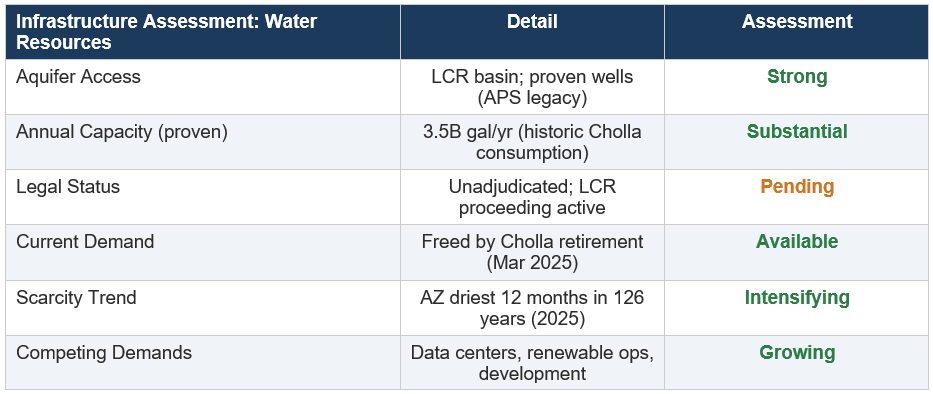
In 1972, Aztec entered into a contract allowing Arizona Public Service to drill wells and pump groundwater from approximately 7,000 acres of Aztec land for $10 per acre per year (approximately $70,000 annually). For 34 years, the Cholla Power Plant consumed approximately 3.5 billion gallons of groundwater annually from these wells for coal plant cooling operations. When the contract neared expiration in 2007, APS attempted to renew at similar rates. Aztec demanded market-rate pricing. APS filed a condemnation action in Navajo County Superior Court seeking to condemn the 7,000 acres to secure long-term water access.
This litigation is extraordinarily revealing. APS - a regulated utility serving millions of customers - considered the water beneath Aztec’s land essential enough to its 1,000 MW generating station that it pursued eminent domain. Michael Brown, Aztec’s attorney, described it as potentially one of the largest condemnation actions in the history of Arizona. The eventual resolution of this dispute (details are not fully public) effectively established that the water beneath Aztec’s land has significant strategic value to major industrial users.
Current Water Situation
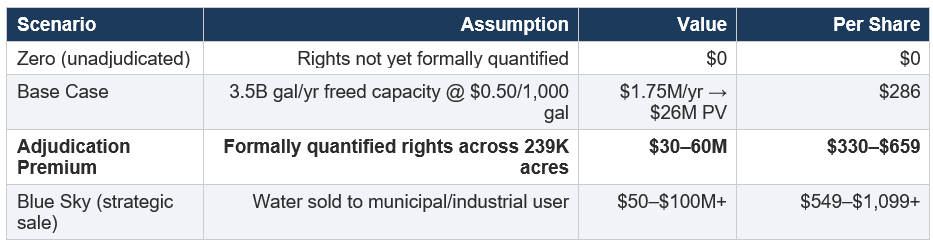
With the Cholla Power Plant retired in March 2025, the 3.5 billion gallons per year previously consumed are no longer being extracted. This represents a significant freed capacity of groundwater that is now available for other uses. The Little Colorado River (LCR) Adjudication - referenced in Aztec’s July 2024 investor update - is a comprehensive legal proceeding to determine water rights in the LCR watershed. A favorable resolution could formally quantify Aztec’s groundwater rights, transforming them from an informal asset into a legally defined, transferable property right.
Water Valuation Framework
Water rights in Arizona are among the most valuable in the Western United States. The Colorado-Big Thompson (C-BT) unit system in northern Colorado, one of the most actively traded water markets, has seen unit prices appreciate at roughly 11.7% annually since 1990, reaching $50,000+ per unit. While direct comparisons between Colorado Front Range water and rural Arizona groundwater are imperfect, the directional trend is clear: water scarcity is intensifying and water rights are appreciating faster than virtually any other real asset class.
Arizona’s groundwater is governed by a Reasonable Use doctrine in areas outside Active Management Areas (AMAs). Navajo County is not within an AMA, which provides more flexibility for groundwater use but also less formal quantification of rights. The LCR Adjudication could change this dynamic significantly.
Infrastructure Score Card: Water
INFRASTRUCTURE DEEP-DIVE: FIBER & BROADBAND
A critical and entirely new development that has received zero investor attention is the construction of a 100+ mile open-access dark fiber middle-mile network through Navajo County, originating in Joseph City and traversing Aztec’s land corridor.
The Navajo County Middle-Mile Fiber Network
Investment: $19.7 million ($9.7M Arizona Commerce Authority grant + $10M Navajo County ARPA funds)
Builder/Operator: eX² Technology (Vivacity company)
Route: Joseph City → Holbrook (I-40) → Snowflake → Taylor → Show Low → Pinetop-Lakeside → Heber-Overgaard
Capacity: Open-access dark fiber with 99.9% uptime guarantee
Status: Construction began April 2024 in Holbrook; dark fiber available for lease in 2025
Connectivity: APS is partnering on the project, connecting its strategic fiber project in Joseph City. The network will interconnect with existing fiber networks and facilitate future connections to Phoenix, neighboring counties, tribal networks, and an I-40 corridor expansion to Albuquerque, NM.
This infrastructure is transformative for Aztec’s land. Fiber connectivity is a necessary precondition for any modern commercial or industrial development, including data center support facilities, remote operations centers for renewable energy, agricultural technology, and telecommunications. The network runs directly through Aztec’s land corridor, effectively adding a fourth utility connection (after power, water, and transportation) to the property.
Additionally, the Frontier/Verizon settlement announced in July 2025 committed $8 million to broadband infrastructure in Navajo and Apache Counties, including $4 million for direct fiber-to-premises connections and $2 million for improved reliability between Holbrook, Snowflake, and Show Low. This represents a second, independent wave of fiber investment traversing Aztec’s territory.
CONCLUSION: THE EVIDENCE IS IN THE GROUND
This is not a speculative story about what might happen someday. The evidence is tangible and verifiable. AES is physically constructing 112 wind turbines on the land. Invenergy broke ground on a 475 MW solar-plus-storage facility in December 2024 and committed $49 million to Navajo County. A $19.7 million dark fiber network is being built through the property corridor. APS contracted both projects as part of its largest-ever renewable energy RFP. The Cholla Power Plant’s 500kV switchyard sits adjacent to the land. 3.5 billion gallons per year of water capacity was freed when Cholla retired. The Holbrook Basin contains a confirmed potash resource of 0.68–2.5 billion metric tons.
The market sees a cattle ranch. The evidence says it is a diversified, infrastructure-rich land platform at the early stages of a multi-decade monetization cycle. The gap between perception and reality is where the opportunity lives.